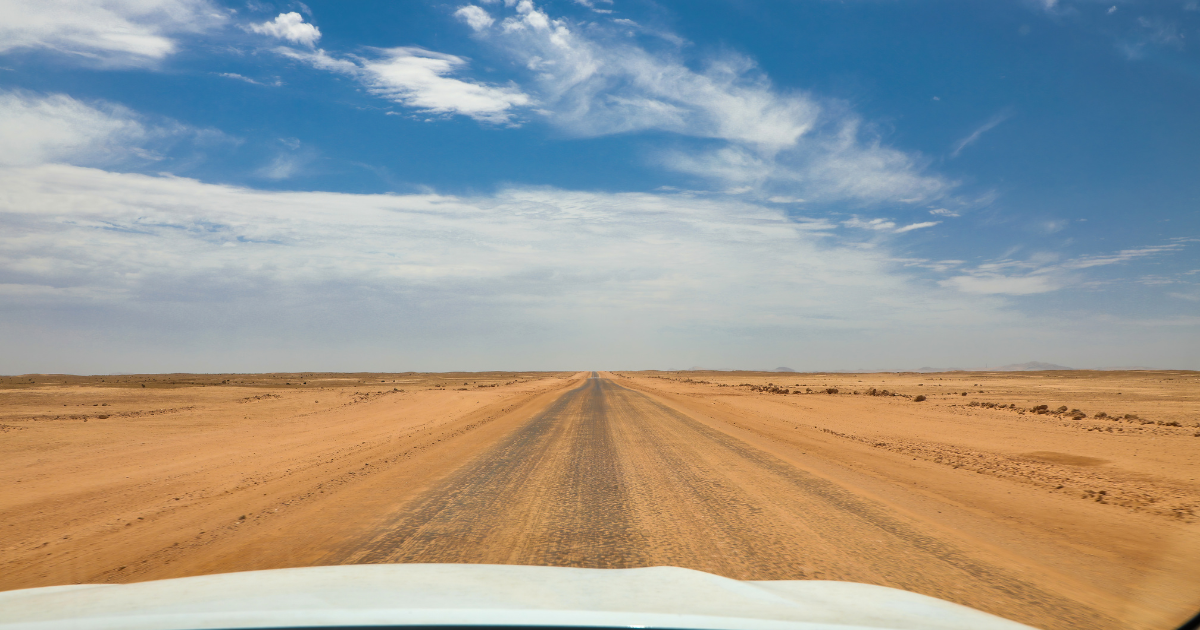
Self-drive in Namibia
You drive. We plan the route, book the places to stay and tell you honestly what the roads are like.
Taking the wheel
Why self-driving works so well in Namibia
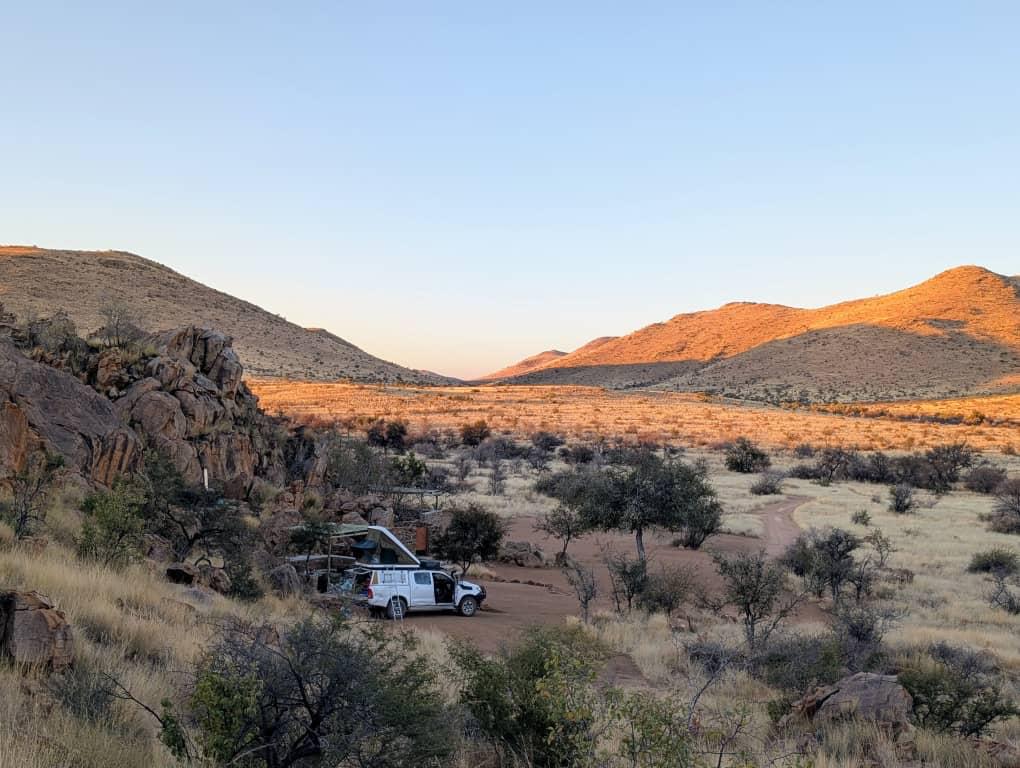
Namibia works really well on your own. The roads are quiet, the country is wide open, and you can stop whenever something catches your eye: an oryx standing next to the road, a view you want to sit with for a while, apple pie in Solitaire.
Your days are your own. Leave early for the dunes, stay an extra hour at a waterhole in Etosha, or take the longer road because it looks better. That freedom is what self-drive is really about.
What you don’t want is to spend that freedom working out distances, chasing lodges with space or wondering whether your car can handle the next road. That’s the part we do.
How it works
What we do for you
A self-drive trip with us isn’t just a car and a map. We plan it the way we’d plan our own trips.
The route
We work out a route that suits your time and how much you enjoy driving, with realistic driving days and enough nights in the places that deserve them.
Places to stay
While we build the route, we pre-book every lodge, guest farm or campsite along the way, so we only suggest places that actually have space.
Your vehicle
We arrange the car that fits your route, from a regular car to a 4×4 with rooftop tents and everything you need for camping.
Activities
Dune walks, boat trips, guided game drives, rhino tracking: we book what you want to do and fit it around your driving days.
The Rooikop Journey Companion
Your trip goes into the Rooikop Journey Companion, day by day: where you’re sleeping, your booking details, directions, activity times and our recommendations for stops along the way. It works offline, so you can still check your itinerary when there’s no phone signal.
Us, while you travel
If something changes on the road, you message us directly. We’re here in Windhoek.
Good to know
What the roads are actually like
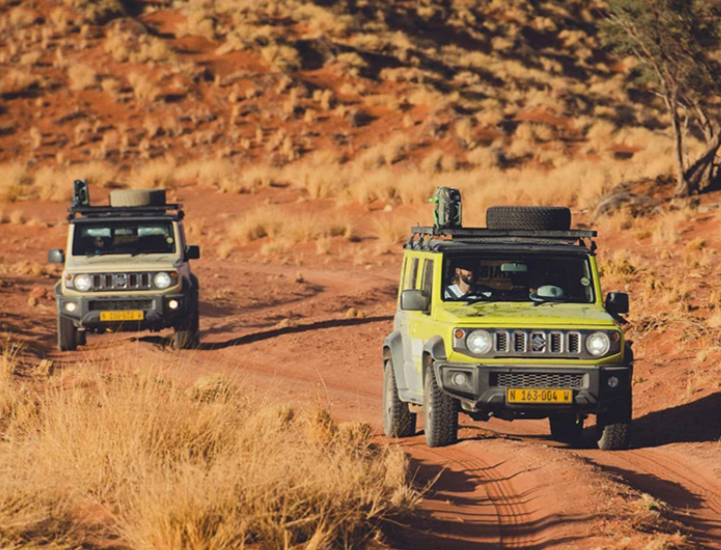
We drive on the left. If you’re used to the right, give yourself the first day to settle in.
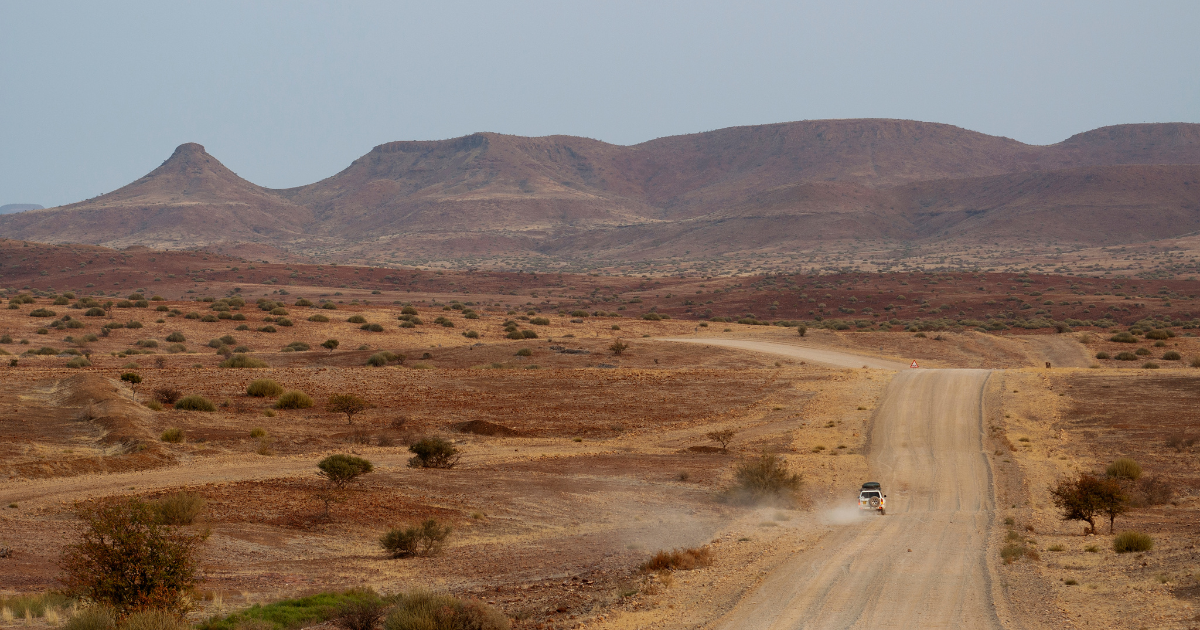
A lot of the driving is on gravel. Many gravel roads are well maintained, but they’re not tar, and conditions can change from one stretch to the next. Slow down for loose gravel, corrugations, bends and poor visibility, and don’t drive faster than the conditions allow. We’ll give you practical advice for the routes you’re taking.
Punctures happen. Punctures aren’t unusual on gravel roads, and a road that starts off smooth can become corrugated or stony further along. It’s worth knowing how to use your spare tyre and what to do if you have a problem.
Distances are big. Fuel stations can be far apart, so fill up whenever you get the chance. In smaller places, card machines don’t always work, so carrying some cash is sensible. We’ll point out the fuel stops to plan around on your route.
Keep water in the car. Take regular breaks and leave room in the day for stops. On remote stretches, help may be a long way away if something goes wrong.
Arrive before dark. Animals cross the roads, especially early and late in the day. We plan realistic driving days and aim for you to arrive before dark.
Signal comes and goes. In many areas there’s no phone signal for long stretches. That’s why your trip is in the Rooikop Journey Companion, which works offline.
Know your vehicle. Before setting off, make sure you know which fuel your vehicle takes, where the spare tyre and tools are, and who to contact if you have a breakdown. The rental company’s vehicle handover is worth taking your time over.
Your driving licence. Make sure your licence is valid for driving in Namibia. If it isn’t in English, you will need an International Driving Permit or an official translation.
Choosing a vehicle
Which car do you need?
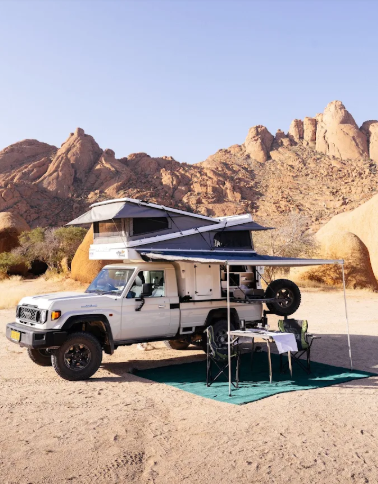
It depends on your route. Some trips are perfectly manageable in a regular car, while others are more comfortable in a high-clearance vehicle or require a 4×4. We’ll look at the roads, the places you’re visiting and how you’re travelling before recommending a vehicle. We’ll tell you honestly what your route needs, rather than putting you in the biggest vehicle by default.
If you want to camp, a 4×4 with rooftop tents and a full camping kit is a great way to see the country. If you’d rather sleep in a bed every night, we’ll plan lodges and guest farms instead. Plenty of people do a bit of both.
Need ideas?
Self-drive routes to start from
These are self-drive trips we’ve planned. Use them as a starting point and we’ll change whatever you like.
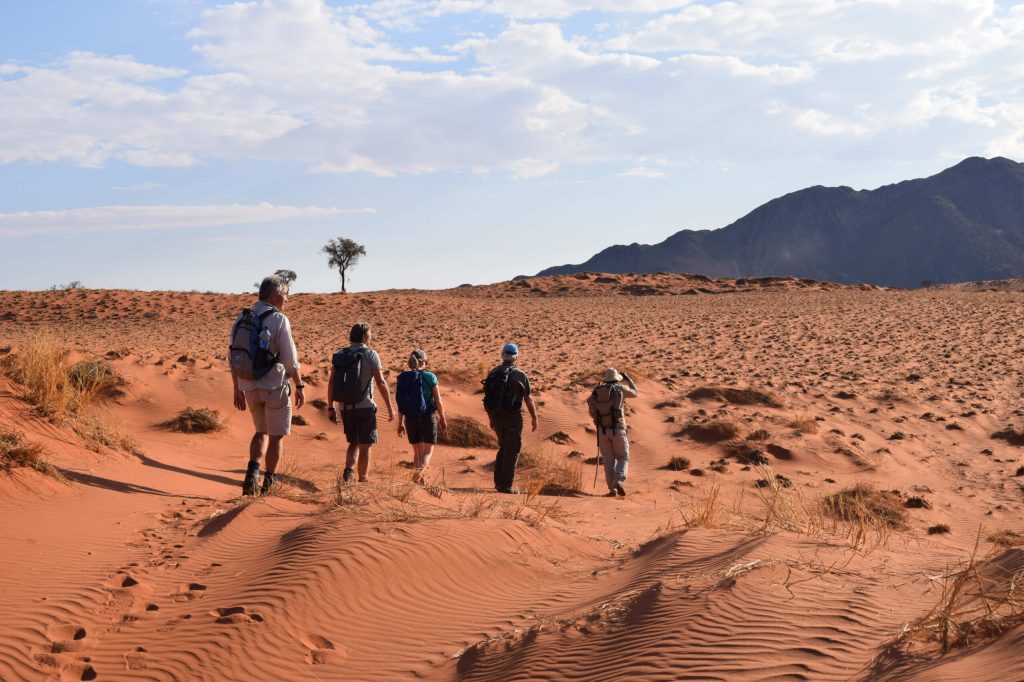
14 days · Self-drive and walking
Sossusvlei, Swakopmund and Etosha, with two nights walking in the NamibRand and desert elephant tracking in Damaraland.
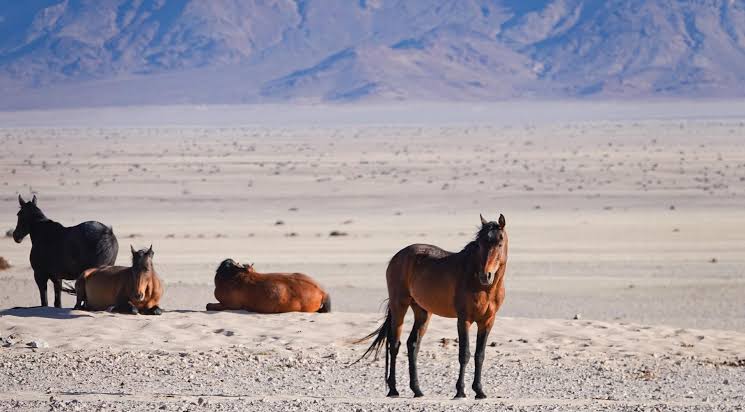
12 days · Self-drive
Lüderitz, Kolmanskop, the Fish River Canyon and two nights with the big cats in the Kgalagadi Transfrontier Park.
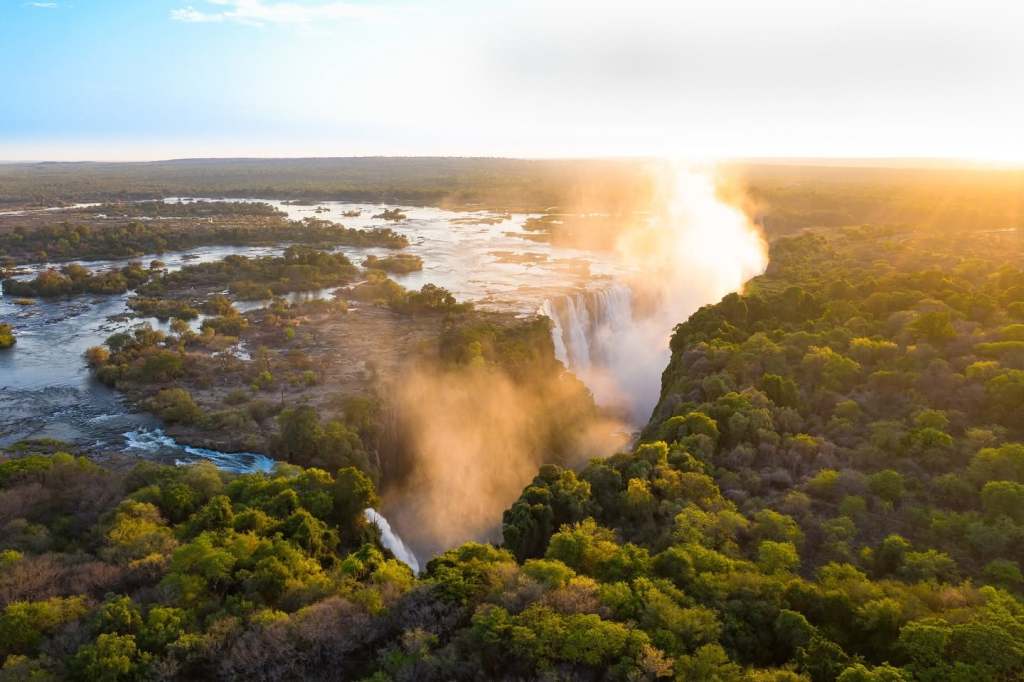
Victoria Falls to the Atlantic
22 days · Self-drive
Three countries, a boat safari on the Chobe, the Zambezi Region, Etosha, walking in the Etendeka and black rhino tracking, finishing on the Atlantic coast.
Not sure you want to drive? We also plan guided trips and fly-in safaris, or a mix of both.
Thinking of driving Namibia?
Tell us when you’re coming, how long you have and what you’d like to see. We’ll send you a route that works on the road, not just on the map.
Or email us at info@rooikoptravel.com.
You can also call or WhatsApp us on +264 81 780 6327.


You must be logged in to post a comment.